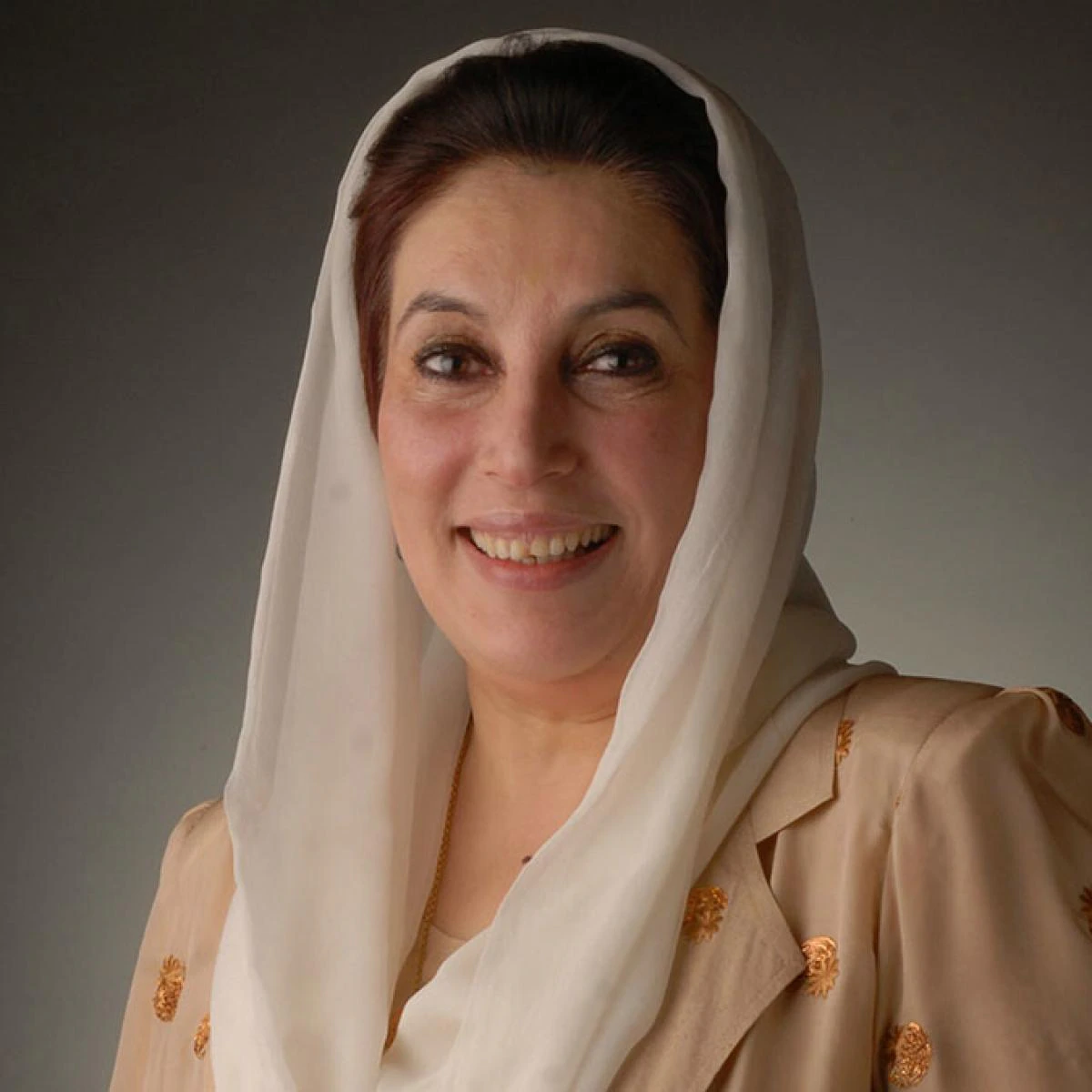
Benazir Bhutto
Politician, Businessperson, Prime Minister
Birth Chart/Janam Kundli Summary
In Birth chart (Janam Kundli) of Benazir Bhutto : Ascendant/Lagna is Saggitarius/Dhanu(Utharashada nakshatra), Moon (Chandra) is in sign of Libra/Tula (Chitra nakshatra), Sun (Surya) is in sign of Gemini/Mithuna (Ardra nakshatra), Mars (Mangal) is in sign of Gemini/Mithuna (Ardra nakshatra), Mercury (Budh) is in sign of Cancer/Karka (Punarvasu nakshatra), Venus (Shukra) is in sign of Aries/Mesha (Bharani nakshatra), Jupiter (Guru) is in sign of Taurus/Vrishabha (Rohini nakshatra) and Saturn (Shani) is in sign of Virgo/Kanya (Chitra nakshatra).
While Rahu is in sign of Capricorn/Makara (Sravana nakshatra) and Ketu is in sign of Cancer/Karka (Pushya nakshatra).
Benazir Bhutto's Planetary Position
| Planet | House | Zodiac | Degree | Motion | Nakshatra | Pada |
|---|
Frequently Asked Questions (FAQs)
What is the Lagna/Ascendant of Benazir Bhutto?
What is the Sun Sign/Surya Rashi of Benazir Bhutto?
What is the Moon Sign/Chandra Rashi of Benazir Bhutto?
How is Jupiter/Guru placed in Benazir Bhutto‘s Kundli / Birth chart?
How is Venus/Shukra placed in Benazir Bhutto‘s Kundli / Birth chart?
How is Mars/Mangal placed in Benazir Bhutto‘s Kundli / Birth chart?
How is Mercury/Budh placed in Benazir Bhutto‘s Kundli / Birth chart?
How is Saturn/Shani placed in Benazir Bhutto‘s Kundli / Birth chart?
How is Rahu placed in Benazir Bhutto‘s Kundli / Birth chart?
How is Ketu placed in Benazir Bhutto‘s Kundli / Birth chart?
Does Benazir Bhutto‘s Kundli / Birth chart have Mangalik/Kuja Dosha?
But, when analysed with Lal Kitab sutras, birth chart (Janam Kundli) of Benazir Bhutto, does not have Mangalik/Kuja Dosha
Caution: Behavioural study of native is necessary to conclude that native has Mangal/Kuja Dosha or not
Does Benazir Bhutto‘s Kundli / Birth chart have Grahan Dosha?
Life Events
Life Event
Assassinated in a shooting and suicide bomb attack following a political rally at Liaquat Bagh in Rawalpindi, Pakistan
Life Event
Returned to Pakistan from self-imposed exile in Dubai, landing in Karachi where her homecoming motorcade was targeted in a suicide bombing that killed over 180 people
Life Event
President Pervez Musharraf signed the National Reconciliation Ordinance (NRO), granting amnesty to political leaders including Bhutto and paving the way for her return
Life Event
Signed the Charter of Democracy alongside Nawaz Sharif in London to join forces against military rule and restore democracy in Pakistan
Life Event
Went into self-imposed exile in Dubai and London following corruption convictions against her and her husband, Asif Ali Zardari
Life Event
Her second government was dismissed by President Farooq Leghari on allegations of mismanagement and corruption
Life Event
Sworn in as Prime Minister of Pakistan for her second term after the Pakistan Peoples Party won the general election
Life Event
Her first government was dismissed by President Ghulam Ishaq Khan under Article 58(2b) of the Constitution on charges of corruption and incompetence
Life Event
Sworn in as Prime Minister of Pakistan for her first term, becoming the first woman to lead a democratic government in a Muslim-majority nation
Life Event
Led the Pakistan Peoples Party to victory in the general elections following the death of General Zia-ul-Haq in a plane crash
Life Event
Married Asif Ali Zardari in a high-profile ceremony in Karachi
Life Event
Returned to Pakistan from exile in Europe, drawing massive public crowds in Lahore demanding an end to General Zia-ul-Haq's military rule
Life Event
Her younger brother Shahnawaz Bhutto was found dead under mysterious circumstances at his apartment in Cannes, France
Life Event
Allowed to leave Pakistan for medical treatment in the United Kingdom, going into political exile in London
Life Event
Her father, former Prime Minister Zulfikar Ali Bhutto, was executed by hanging under General Zia-ul-Haq's regime
Life Event
Her father's government was overthrown in a military coup d'état led by Army Chief General Muhammad Zia-ul-Haq, leading to her repeated house arrests
Life Event
Graduated from Lady Margaret Hall, Oxford, with a degree in Philosophy, Politics, and Economics (PPE) and became the first Asian woman elected President of the Oxford Union
Life Event
Graduated from Radcliffe College, Harvard University, with a Bachelor of Arts degree in Comparative Government
Life Event
Born to Zulfikar Ali Bhutto and Nusrat Bhutto at Pinto Hospital in Karachi, Sindh, Pakistan
About Benazir Bhutto
Benazir Bhutto (21 June 1953 – 27 December 2007) was a Pakistani politician who served as the 11th prime minister of Pakistan from 1988 to 1990, and again from 1993 to 1996. She was also the first woman elected to head a democratic government in a Muslim-majority country. Ideologically a liberal and a secularist, she chaired or co-chaired the Pakistan People's Party (PPP) from the early 1980s until her assassination in 2007.
Of mixed Sindhi, Persian, and Kurdish parentage, Bhutto was born in Karachi to a politically important, wealthy aristocratic family. She studied at Harvard University and the University of Oxford, where she was President of the Oxford Union. Her father, the PPP leader Zulfikar Bhutto, was elected prime minister on a socialist platform in 1973. She returned to Pakistan in 1977, shortly before her father was ousted in a military coup and executed. Bhutto and her mother, Nusrat Bhutto, took control of the PPP and led the country's Movement for the Restoration of Democracy (MRD). Bhutto was repeatedly imprisoned by Muhammad Zia-ul-Haq's military government and self-exiled to Great Britain in 1984. She returned in 1986 and—influenced by Thatcherite economics—transformed the PPP's platform from a socialist to a liberal one, before leading it to victory in the 1988 election. As prime minister, her attempts at reform were stifled by conservative and Islamist forces within Pakistan, including President Ghulam Ishaq Khan and the Pakistani military. Her administration, having been accused of corruption and nepotism, was dismissed by Khan in 1990. Intelligence services rigged that year's election to ensure a victory for the conservative Islamic Democratic Alliance (IJI), at which point Bhutto became the Leader of the Opposition.
After the IJI government of Prime Minister Nawaz Sharif was also dismissed on corruption charges, Bhutto once again led the PPP to victory in the 1993 elections. In her second term, she oversaw economic privatisation and attempts to advance women's rights. Her government was beset with instability, including the assassination of her brother Murtaza, a failed 1995 coup d'état, and a bribery scandal involving her and her husband Asif Ali Zardari; in response, President Farooq Leghari dismissed her government. The PPP lost the 1997 election, and in 1998 she went into self-exile once more, living between Dubai and London for the next decade. A widening corruption inquiry culminated in a 2003 conviction in a Swiss court. Following the United States–brokered negotiations with Pakistani President Pervez Musharraf, she returned to Pakistan in 2007 to run in the 2008 elections. Her platform emphasised civilian oversight of the military and opposition to growing Islamist violence. After a political rally in Rawalpindi, she was assassinated in December 2007. The Salafi jihadist militant group al-Qaeda claimed responsibility, although involvement of the Pakistani Taliban and rogue elements of the intelligence services were also hypothesised. She was buried at her family mausoleum in Garhi Khuda Bakhsh.
Opinions on Bhutto were deeply divided. Pakistan's Islamist groups and conservative forces often accused her of being politically inexperienced, corrupt, and opposed her secularist, modernising agenda. In the early years of her career, however, she was nevertheless domestically popular and also attracted support from the international community, being seen as a champion of democracy. Posthumously, she came to be regarded as an icon for women's rights due to her political success in a male-dominated society.
Related Charts/Kundlis
Bhutto Family
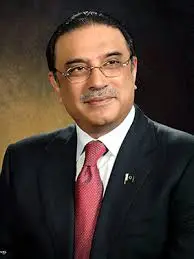
Zardari Family
Politician



















Prime Minister
Kundli Database Bank
At, Agyat Astrology, we have wast range of kundli database, with advanced search where you are allowed to search from profession, major events, planet combinations (including zodiac), Lagna Ascendant.
With Advanced search, one can search people having Sun and Ketu Combination in 2nd house having profession as government official. Advanced search is a paid service, so to avail kundli database with advanced search pleae mail us as care@agyat.one
This is a standard search where you can search database bank with name of celebrities/public personalities